

First of all, the disclaimer: I am invested in Ampco-Pittsburgh ($AP). Nothing I write should be considered investment advice. I bought my first shares at USD 4.05.
Ticker: AP
Price: USD 4.65
Shares Outstanding: 20.23 million
Market Cap: USD 94.53 million
Enterprise Value: USD 253.72 million
The potential improvements from exiting both a larger and a smaller underperforming business are easy to understand, but there are additional catalysts ahead for Ampco-Pittsburgh that are not yet visible in the current financials and are somewhat more complex in nature.
The Company
Ampco-Pittsburgh operates in two major segments that serve customers across several different verticals, each with its own distinct drivers. Although one segment may initially appear to lag behind the other in terms of quality, the current environment could actually be working in its favor, which I will come back to later. I go into more detail than usual when describing the business, as this is essential for understanding the potential catalysts ahead.
Forged and cast-engineered products (FCEP)
The FCEP segment produces forged hardened forged rolls, cast rolls, cast engineered products and forged engineered products. It operates manufacturing facilities in the United States, Sweden, and Slovenia, and holds equity interests in three joint venture companies in China.
The most important products in the portfolio are forged and cast rolls, which are used in hot and cold rolling mills for steel and aluminum production. A substantial majority of global flat steel and aluminum products rely on these rolls, making them a mission-critical consumable in metal processing.
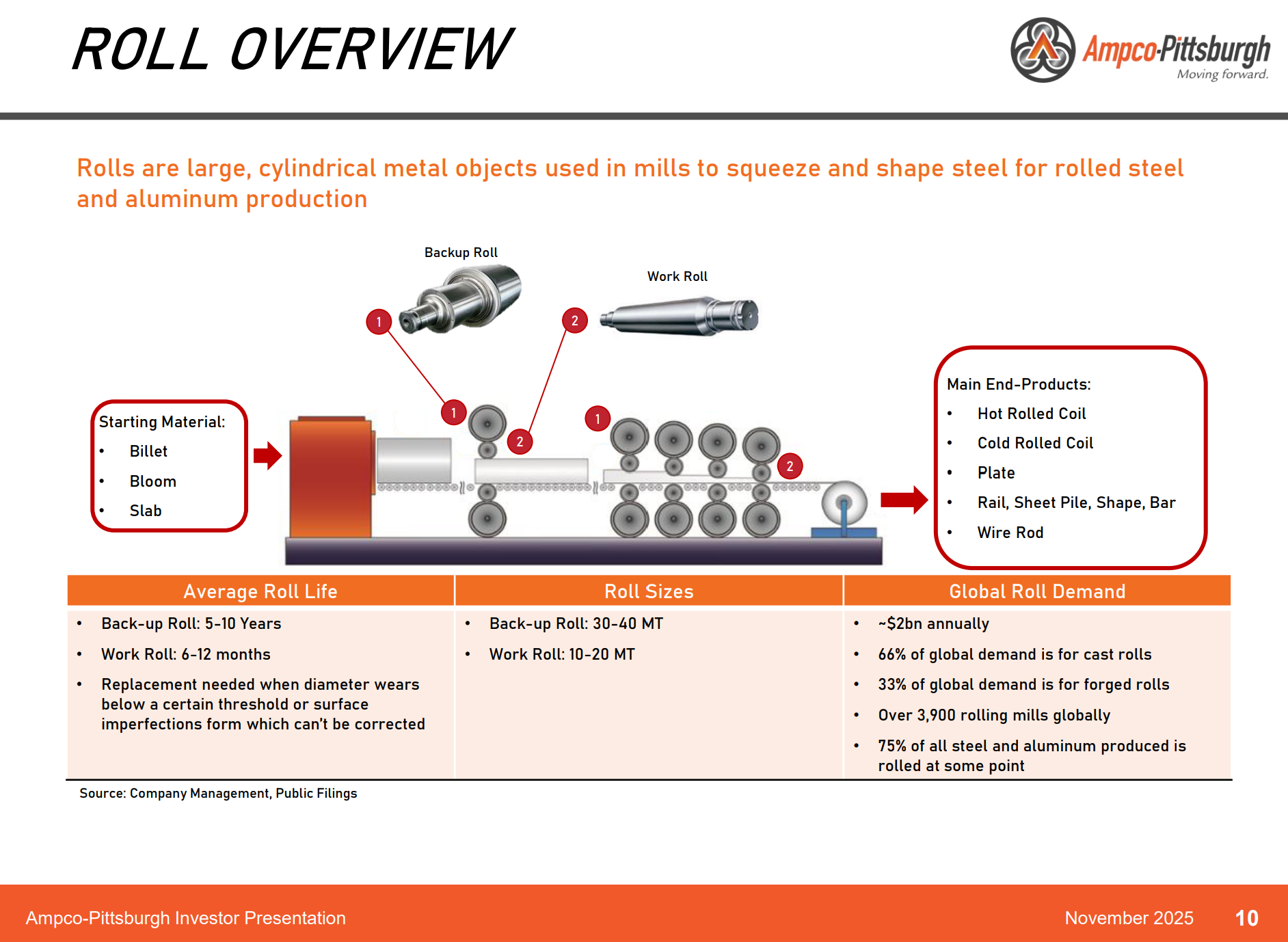
Ampco-Pittsburgh’s roll business manufactures forged and cast mill rolls for these applications. Demand is driven by recurring replacement rather than new capacity additions, resulting in a structurally resilient revenue profile. Switching costs are high due to long qualification cycles and the direct impact of roll performance on mill yield, surface quality, and downtime. As a result, metallurgical expertise and process control are key competitive differentiators. At normalized utilization, the business benefits from strong operating leverage and has historically generated double-digit EBITDA margins, making it the company’s core value driver.
The Cast Engineered Products business manufactures custom steel castings for industrial equipment and infrastructure applications. These components are engineered for specific strength, wear, or corrosion requirements and are used in power generation, mining, fluid handling, and industrial processing. The business relies on metallurgical customization and complex geometries rather than scale, resulting in lower cyclicality than forging but less structural defensibility than the company’s roll operations.
The Forged Engineered Products business manufactures large, custom forged steel components for industrial and energy applications. These products are engineered to order and valued for their strength, toughness, and fatigue resistance, but demand is project driven and highly sensitive to utilization. Unlike the company’s roll operations, Forged Engineered Products lack recurring replacement demand and pricing power, which has ‘historically’ made this category the weakest part of the FCEP portfolio.
Air and Liquid Processing (ALP)
The ALP segment includes Aerofin, Buffalo Air Handling, and Buffalo Pumps, all divisions of Air and Liquid Systems Corporation, a wholly owned subsidiary of the company. The segment operates manufacturing facilities in Virginia and New York, with headquarters in Carnegie, Pennsylvania.
Aerofin produces custom engineered finned tube heat exchange coils and related heat transfer products for a broad range of end markets, including original equipment manufacturers, commercial and industrial customers, and nuclear power generation.
Buffalo Air Handling designs and manufactures large custom air handling systems for institutional markets such as hospitals and universities, as well as pharmaceutical and general industrial facilities.
Buffalo Pumps manufactures centrifugal pumps serving the fossil fueled power generation, marine defense, and industrial refrigeration industries.
The Investment Case
The company makes no secret of its current strategic plan. On the surface, it sounds very simple: ‘Eliminate unprofitable assets, benefit from general opportunities in the A&L segment, and increase asset utilization through the UK exit as well as changes in the competitive and regulatory environment.’ To truly understand the current opportunity from a shareholder perspective, taking a look under the hood can pay off.
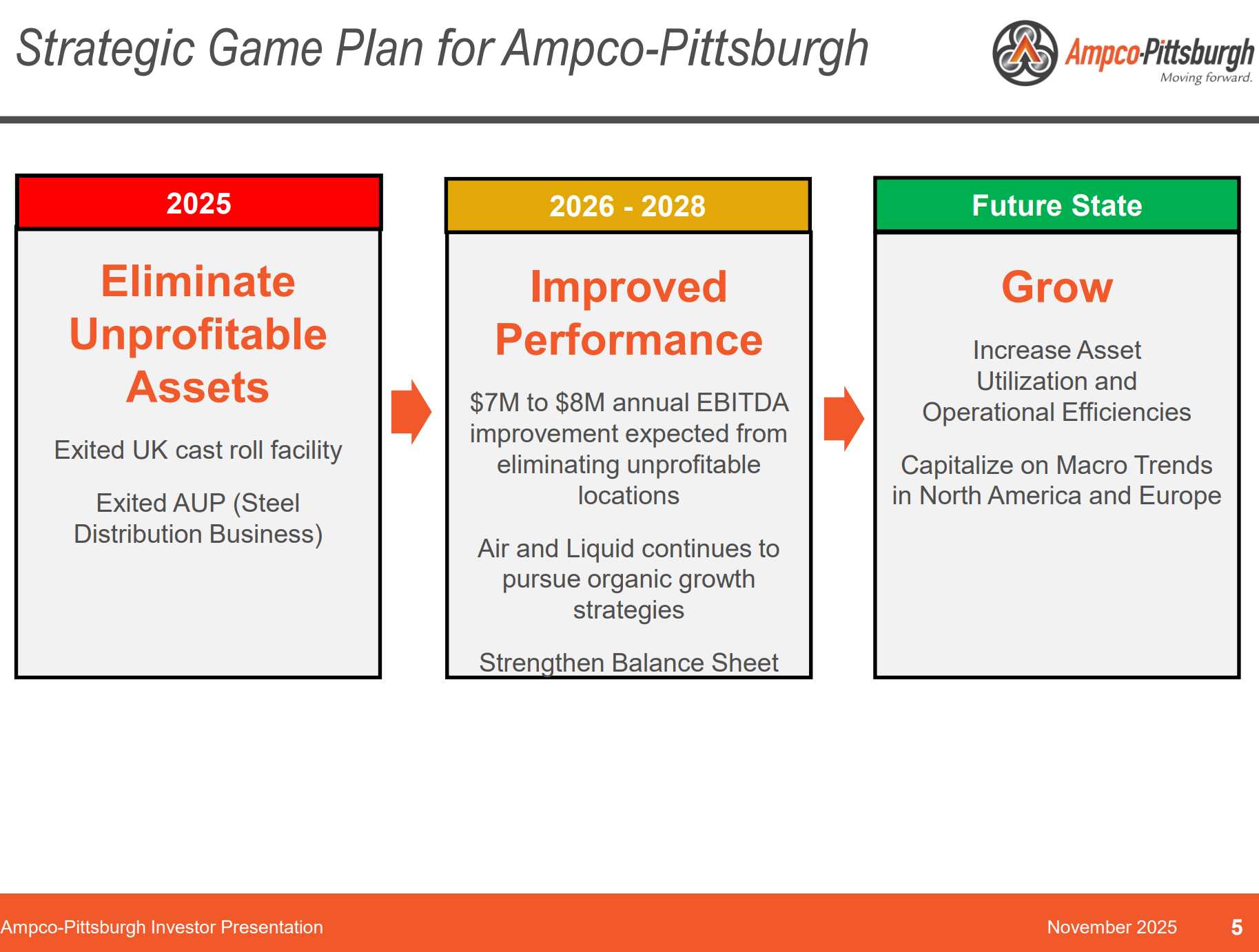
The most important aspect is that the company exited a loss making UK business, which it expects will have a positive impact of $7 to $8 million on EBITDA in 2026 compared to the full year 2025. Given that the standalone financials of this subsidiary showed an operating loss of £6 million in 2023 this appears to be a fair assumption.
Just after the quarter closed, in October, we accelerated the exit from our U.K. facility. We are also nearing completion of our exit from a small steel distribution business, AUP. The impact from our U.K. exit alone is expected to improve full year adjusted EBITDA by $7 million to $8 million. These two actions remove our most significant operational drag and positions us for dramatically improved profitability as we move forward.
Brett McBrayer - Third Quarter 2025 Earnings Results Conference Call
Before going deeper into the details, it is worth noting that this is not the first strategic plan, and the previous one could be viewed as a failure from a pessimistic perspective. When Brett McBrayer was appointed CEO in 2018, the strategy already focused on exiting what were then considered non core assets and right sizing the company, with a stronger emphasis on profitability through higher productivity.
As part of this plan, the company exited a specialized parts and service provider to North American rolling mills, a Canadian specialty steel operation, and a North American cast roll operation. In my view, these steps can be interpreted as a clear move away from empire building and from specialized operations with limited operational advantages, which historically contributed to higher operational and earnings volatility compared to the forged and cast roll business.
At the time, the company postponed the irreversible exit from certain operations. Its most problematic assets were deeply intertwined with otherwise profitable businesses, most notably the loss making UK facility, which shared customers, engineering resources, and production know how with the core roll business. Exiting this operation required years of contract renegotiations and volume reallocation, a process management initially delayed in the hope of a cyclical recovery. These expectations ultimately did not materialize, and additional issues emerged over time.
The U.K. operations have been impacted by unpredictable and high energy costs compared to its foreign competitors, lower demand for its products manufactured in the U.K., and increased imports of rolls and flat rolled steel into Europe from low-cost countries.
Form 10-Q for Ampco Pittsburgh Corp - Q3 - 2025
Based on comments from the most recent earnings call, management has now been able to reallocate part of the volume to the Sweden plant. The remaining volume that cannot be produced in Sweden, likely cast rolls, is expected to be converted into forged rolls. Overall, this should materially increase plant utilization and, in turn, improve profitability. Overall, the company shut down a loss making operation while reallocating and increasing volumes at another facility.
John Bair
And then following up on that then my understanding is that you'd be supplying or hoping to supply existing customers that have been served by that facility from your other European operations. Is that right?
Sam Lyon
A portion of it, John, this is Sam again. The work rolls we will maximize the Sweden plant. So, the utilization there will definitely increase significantly. And then there was one type of roll that cannot be made in Sweden, some of them will be converted to forged rolls. There's very limited supply in the marketplace. So, we'll see some of that come to the U.S. But there will be an overall slight reduction in revenue, but obviously a big gain in profitability.Third Quarter 2025 Earnings Results Conference Call
What is also notable is that management expects to realize a meaningful amount of proceeds from the liquidation of the UK subsidiary.
And so, the liquidation proceeds would first go and be remitted to the bank group who would then reduce our outstanding asset-based loan balance, which is our revolving credit facility. So, yes, we do expect. We had some projections from the administrator and we've analyzed those and 9 Ampco-Pittsburgh Corporation Thursday, November 13, 2025, 10:30 AM ET we've included those in our assessment of the net charge we will record in Q4 and we'll net that charge down by an estimated proceeds amount, which is $8 million to $9 million expected in net proceeds through that process.
Mike McAuley - Third Quarter 2025 Earnings Results Conference Call
The cessation of the UK business alone would already be meaningful, as it materially increases adjusted EBITDA, likely reduces net debt, and therefore significantly lowers leverage. However, this is not the only factor supporting the attractiveness of this segment.
In response to ongoing European deindustrialization, the European Union is likely to introduce new measures to protect the domestic steel industry. The current steel safeguard framework is set to expire on June 30, 2026 and will be replaced by a new regime, potentially earlier depending on the legislative process.
The proposed changes materially tighten the trade environment through two key mechanisms:
First, a reduction in import quotas, limiting tariff free steel imports to 18.3 million tonnes per year. This represents a reduction of approximately 47 percent compared to the 2024 quota levels.
Second, a doubling of the out of quota duty to 50 percent, up from 25 percent under the current safeguard measures.
In addition, the new framework introduces more restrictive flexibility within the quota system and closes several loopholes related to traceability, which had previously allowed certain imports to bypass effective enforcement. These adjustments further limit the ability to circumvent the safeguards. Taken together, the proposed changes would substantially raise the barriers for steel imports into Europe and could materially improve the competitive positioning of European producers.
Through the new rules, the European steel industry should benefit from higher utilization and improved profitability, supporting long term capacity retention. Importers face the risk that quotas may be unexpectedly exhausted mid quarter, which would immediately trigger a 50 percent tariff and result in a sharp and unpredictable price increase. This, in turn, should translate into sustained and structurally higher demand for domestically produced rolls, as higher production volumes increase the need for ongoing roll replacement.
Another aspect not mentioned by the company, but which should also support its European business, is the Carbon Border Adjustment Mechanism introduced by the European Union. CBAM imposes a carbon cost on imports of carbon intensive products to align them with the costs EU producers face under the EU Emissions Trading System.
In its current scope, CBAM directly covers iron and steel as well as certain semi finished and finished steel products. Importers are required to declare the embedded emissions of these products and, over time, purchase CBAM certificates that reflect prevailing EU carbon prices.
Many low cost steel producers outside the EU benefit from coal heavy energy mixes and weak or non existent carbon pricing. CBAM partially neutralizes this advantage by internalizing carbon costs at the border. This improves the relative competitiveness of EU based steel production and helps stabilize demand for EU supplied consumables such as rolls.
From January 1, 2026 onward, importers will be required to purchase CBAM certificates. The associated costs will ramp up gradually, with the mechanism becoming fully effective by 2034.
So far, the discussion has focused on the European steel business, but the US business may also benefit from the current political environment, while the European facilities could see catch up effects as US customers rebuild inventories.
The company believes that customers in the US postponed roll purchases and are therefore currently operating with low inventory levels.
Looking at the roll market in North America, some customers temporarily postponed roll purchases due to tariff uncertainty and, as a result, have lowered their existing roll inventory. This supports our view that a return to more normal roll ordering patterns is approaching as inventory levels deplete. Overall, tariffs are expected to have a neutral impact on roll demand in North America, as our U.S. customers will benefit. Conversely, tariffs will negatively affect our Canadian and Mexican customers as their imports into the U.S. are affected.
To date, we've passed all tariffs on to our customers. The tariff environment for our European imports remains a key focus. Our imports to the U.S. from Sweden now face tariffs between 15% and 27%, and products from Slovenia faced rates as high as 50%. The cast roll market in North America continues to exceed domestic capacity, so long-term demand for our European cast rolls should not be affected by these tariffs.
We expect that the roll tariff effect will be temporary. In addition, our European customers have lean inventory. Any uptick in demand will require additional roll orders.
Sam Lyon - Third Quarter 2025 Earnings Results Conference Call
To wrap it up, the tariffs have not had a lasting negative impact on the company’s European subsidiaries and are instead likely to result in a catch up effect.
As mentioned earlier, the company’s steel business consists of three parts. The FEP business is also benefiting from the current tariff environment, which is likely to remain supportive for the foreseeable future.
Year-to-date, FEP revenue increased approximately 40% to $14.4 million compared to $10.2 million last year. We continue to raise prices on this product, improving margins as import barriers have increased.
Sam Lyon - Third Quarter 2025 Earnings Results Conference Call
It is fair to say that the steel segment benefits from the current environment and has several potential catalysts ahead. That said, it represents only part of the business and, arguably, the lower quality segment, although this distinction may be less relevant in the current situation.
The Air and Liquid Processing segment is driven by different factors, several of which are likely to strengthen further over the course of the next year. The segment has grown from 84.7 million dollars in 2021 to 131.7 million dollars in 2024. Year to date, it has again shown solid growth, and management expects further expansion of 8 to 10 percent, driven by the growth outlook of the niche markets it serves.
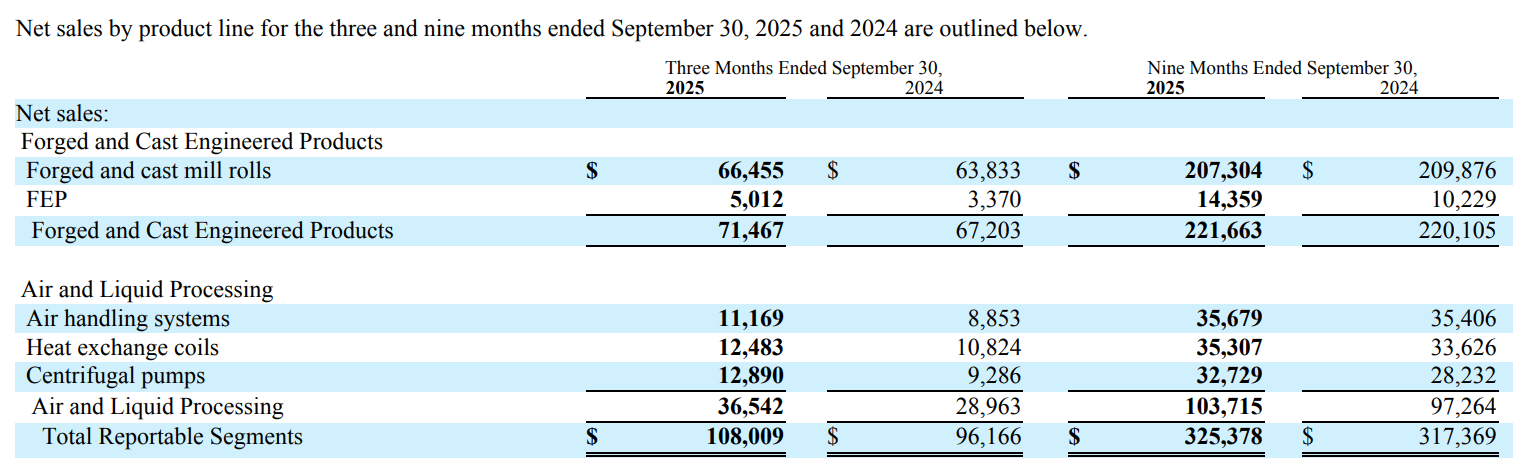
At present, the ALP segment’s portfolio is relatively balanced from a revenue perspective, although some end markets are likely to benefit more than others.
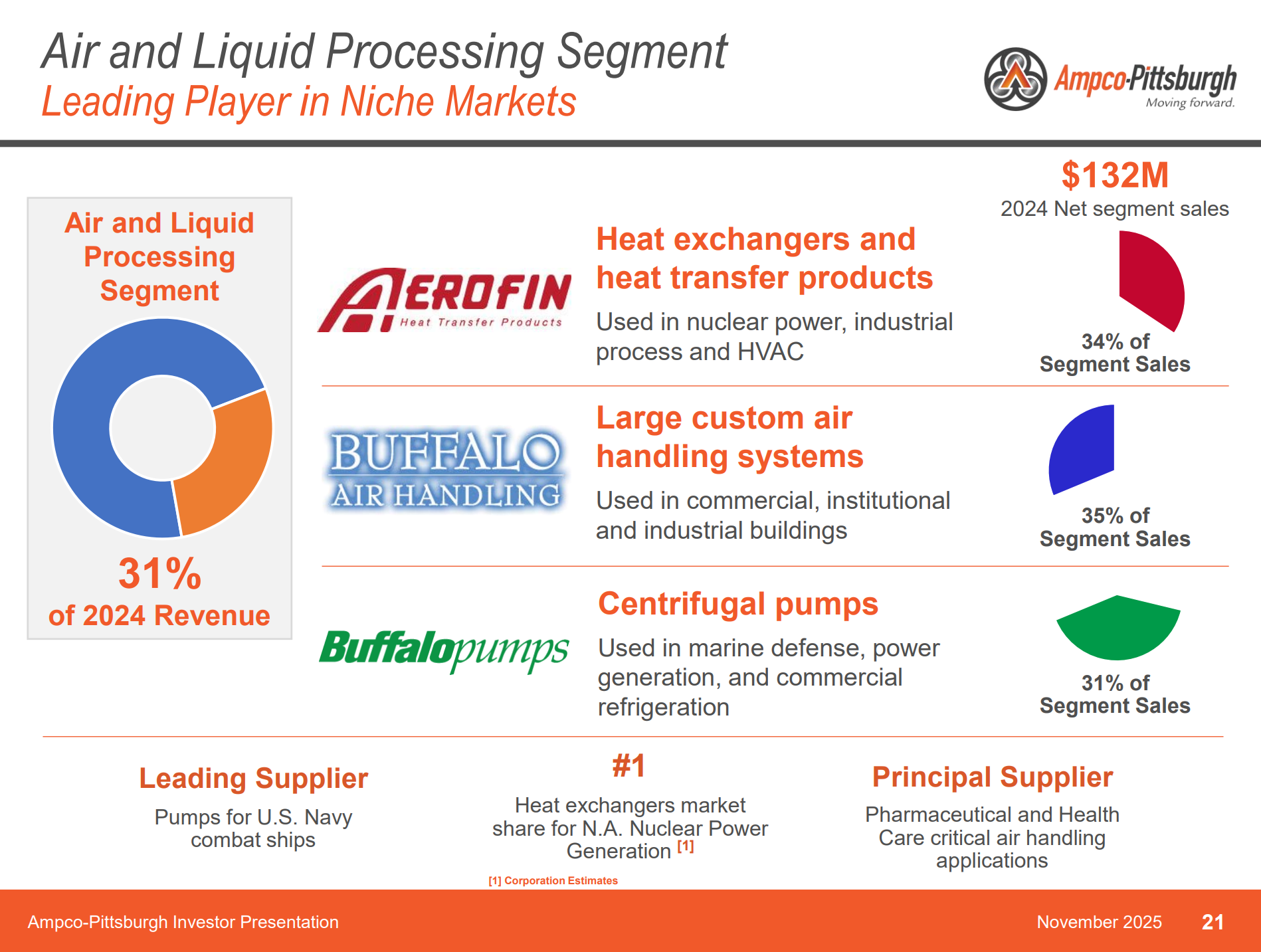
Let’s start with Aerofin. Heat exchangers are a critical component in nuclear power plants, and nuclear power generation is expected to grow meaningfully over the coming years. Based on management’s statements, Aerofin is the leading supplier in the North American market.
While the US has seen few, if any, large scale nuclear projects over the past decade, the small modular reactor market is expected to expand significantly. As of mid 2025, the global SMR project pipeline totaled roughly 47 gigawatts, with the US accounting for about 53 percent of that capacity.
We continue to see positive activity in the nuclear market for our heat-exchange product line. Orders and shipments have already exceeded any prior full year. From restarting legacy plants to the new small modular reactors, nuclear power appears to be at the beginning of significant long-term market growth. Our engineering and manufacturing capabilities position us well as this market continues to grow.
David Anderson - Third Quarter 2025 Earnings Results Conference Call
In March, we received our first order for a small modular reactor or SMR project. There’s a great deal of activity in the new SMR market, and we have started working with several companies that are developing these new products.
David Anderson - First Quarter 2025 Earnings Results Conference Call
Another important aspect is timing. Heat exchangers are required relatively early in the construction process of a new reactor, as they are considered long lead procurement items. If the anticipated increase in nuclear construction materializes, Aerofin should therefore be an early and disproportionate beneficiary of this trend.
Buffalo Pumps could benefit from several tailwinds, but the most important is likely the significant expansion of the United States Navy outlined in its 2025 plan. Centrifugal pumps are used in a wide range of shipboard systems, such as cooling circuits and propulsion related applications.
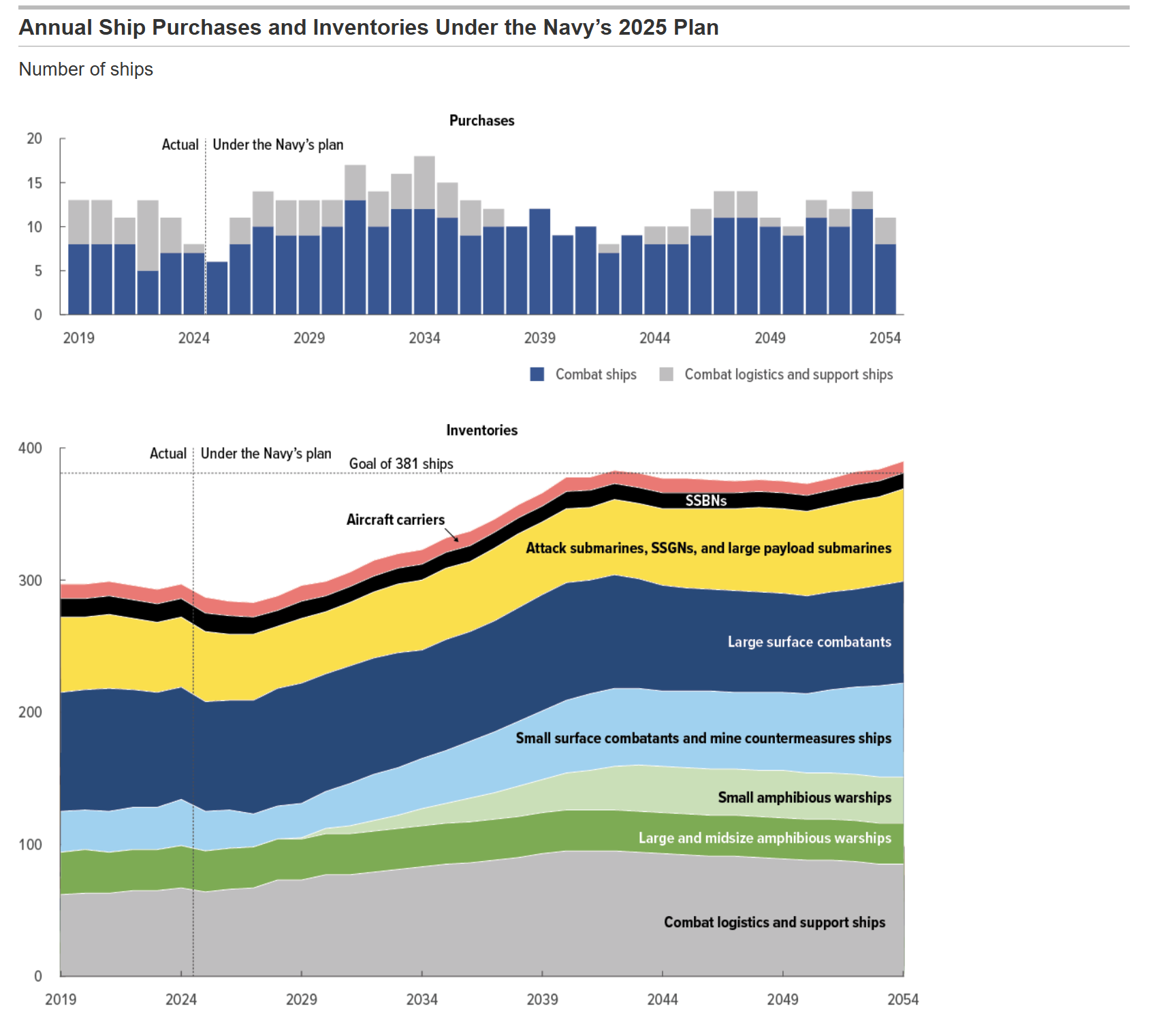
The Navy’s 2025 plan would cost 46 percent more annually in real terms (that is, adjusted to remove the effects of inflation) than the average amount appropriated over the past 5 years. CBO estimates that total shipbuilding costs would average $40 billion (in 2024 dollars) over the next 30 years, which is about 17 percent more than the Navy estimates. CBO’s estimates for the 2025 plan range from 8 percent to 16 percent higher in real terms than its estimates for the three alternatives in the Navy’s 2024 plan. Including the costs of operating and maintaining those ships, buying new aircraft and weapons, and funding the Marine Corps, the Navy’s total budget would need to increase from $255 billion today to $340 billion (in 2024 dollars) in 2054 to implement the 2025 plan.
Congressional budget office - An Analysis of the Navy’s 2025 Shipbuilding Plan
There is little doubt that Buffalo Pumps is positioned to benefit from this increase in spending, given that the Navy has awarded the company approximately 9 million dollars in funding to expand and modernize the capacity of its pump production facility between 2024 and 2026.
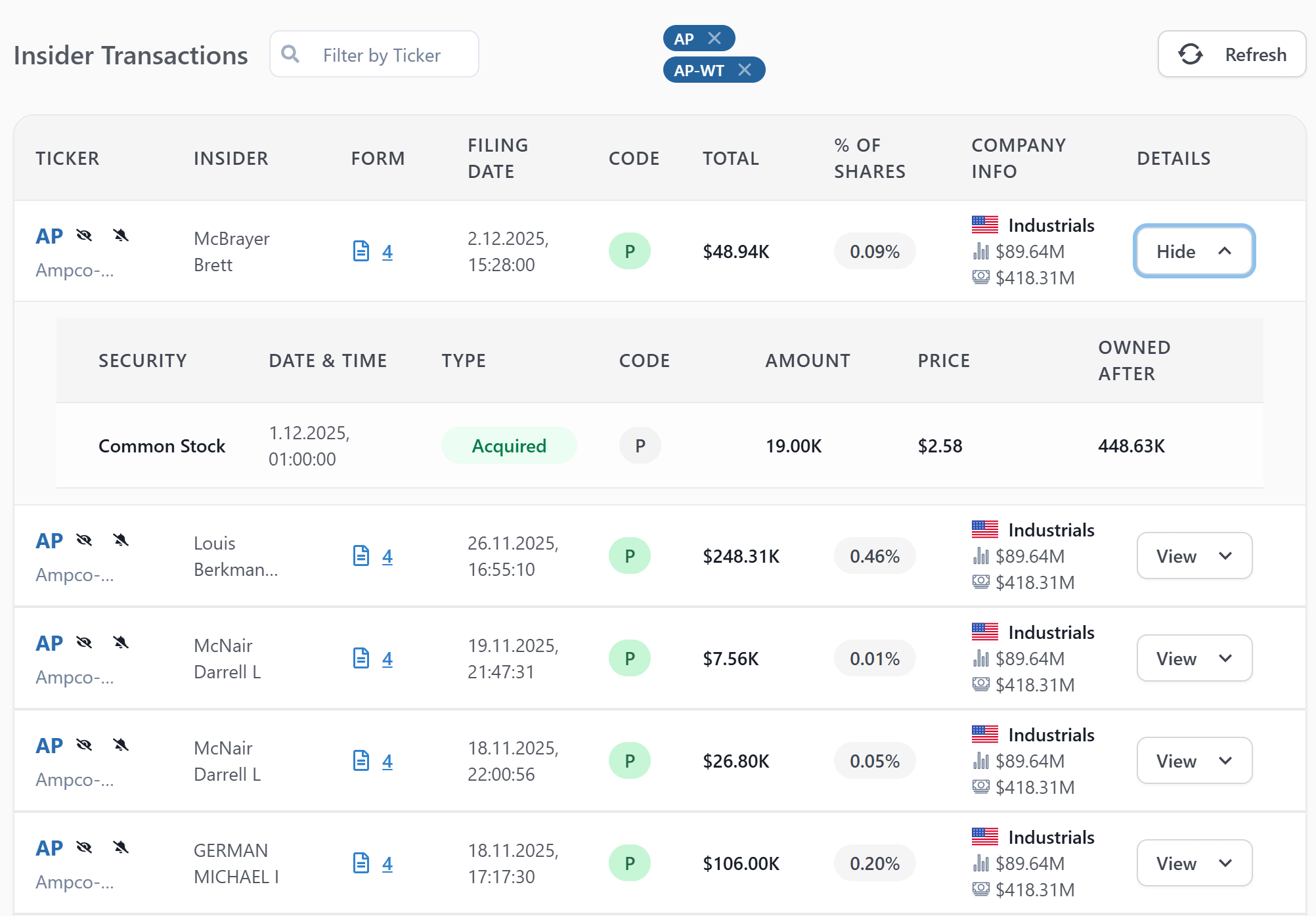
Given this overall setup, it is not surprising that several insiders have recently been buying shares. In addition, a well known activist investor has taken a position, advocating for measures aimed at increasing shareholder value, including typical options such as a sale or a merger.
The Financials
I’ll be completely honest. Modeling Ampco Pittsburgh’s future financials is highly complex, and it took me days to fully understand what might be driving certain outcomes and margin dynamics. The conclusions I’ve drawn represent the best explanation I could arrive at, based on management’s comments, the financial statements, and relevant specialist literature. I also think that, at this stage, it is less important to model numbers that are close to a precise potential reality, given that utilization is likely to increase regardless.
When looking at the table, the first thing to note is that EBITDA generated by the ALP segment converts into EBIT much more efficiently than EBITDA from the FCEP segment. To put numbers behind this, depreciation and amortization in 2024 amounted to $17.6 million for FCEP, compared to just $1 million for ALP. This highlights that ALP is arguably the higher quality segment, as it delivers strong EBIT performance despite the absence of strong regulatory protection.
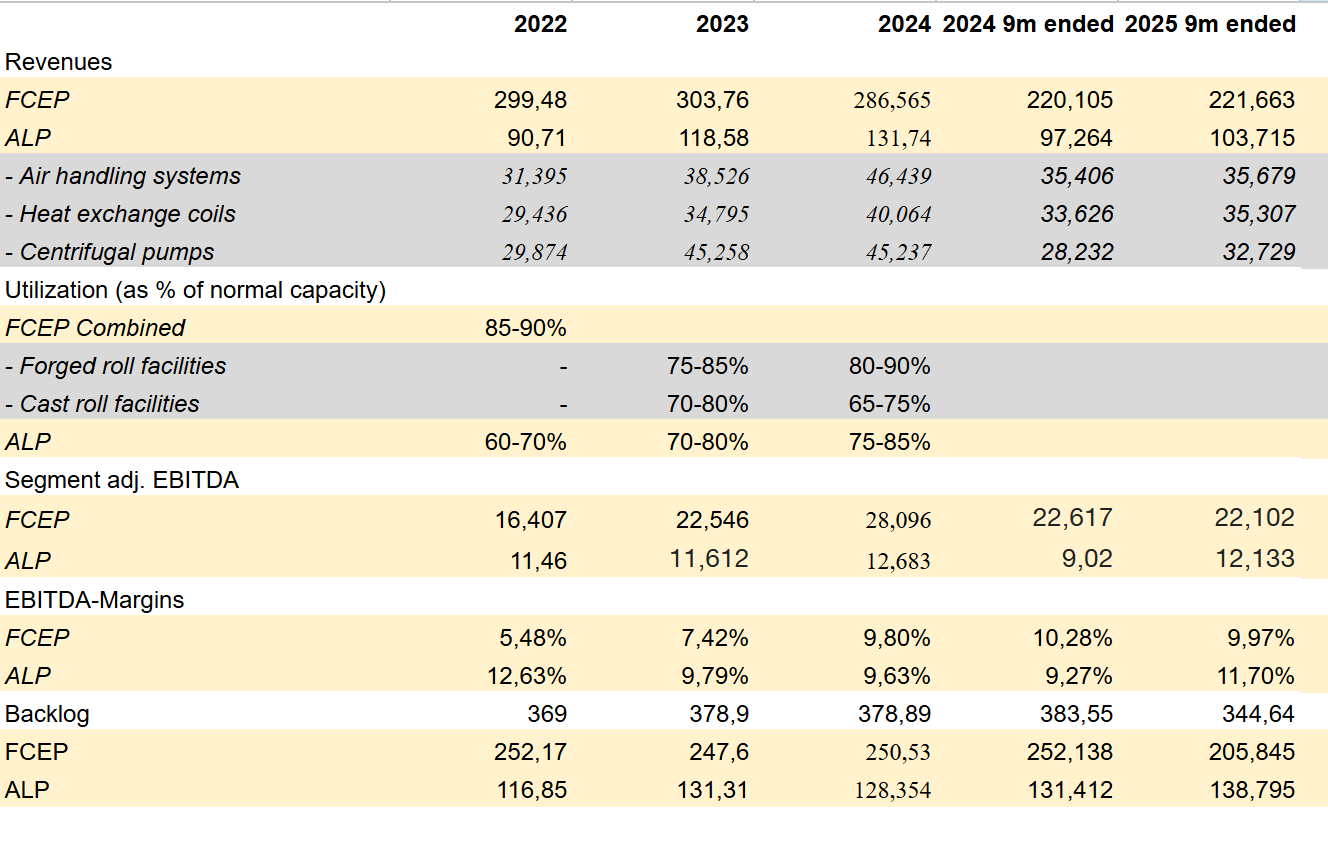
Another aspect to note is that the company unfortunately only began disclosing detailed utilization figures for forged roll and cast roll facilities in its 2023 10 K. Had this level of disclosure been provided earlier, the historical picture would be significantly clearer.
In 2023 and 2024, the high utilization of forged rolls appears to have been a key driver of the improved performance in the FCEP segment. While this observation is factually correct, it is important to note that cast rolls are very likely the structurally higher margin products. Industry literature, including the ASM Handbook and established rolling mill technology texts, consistently describes centrifugally cast rolls as premium products used in finishing and other high performance applications, where superior wear behavior and surface quality are critical. These rolls typically command higher purchase prices as a result. Although manufacturers do not disclose profitability by roll type, this positioning strongly suggests that cast rolls carry structurally higher margins than forged rolls, which are generally more standardized and more price sensitive.
While Ampco does not disclose product mix by facility, risk disclosures at the UK entity level explicitly reference demand for cast steel rolls, suggesting that cast roll production represented a meaningful portion of the UK operation.
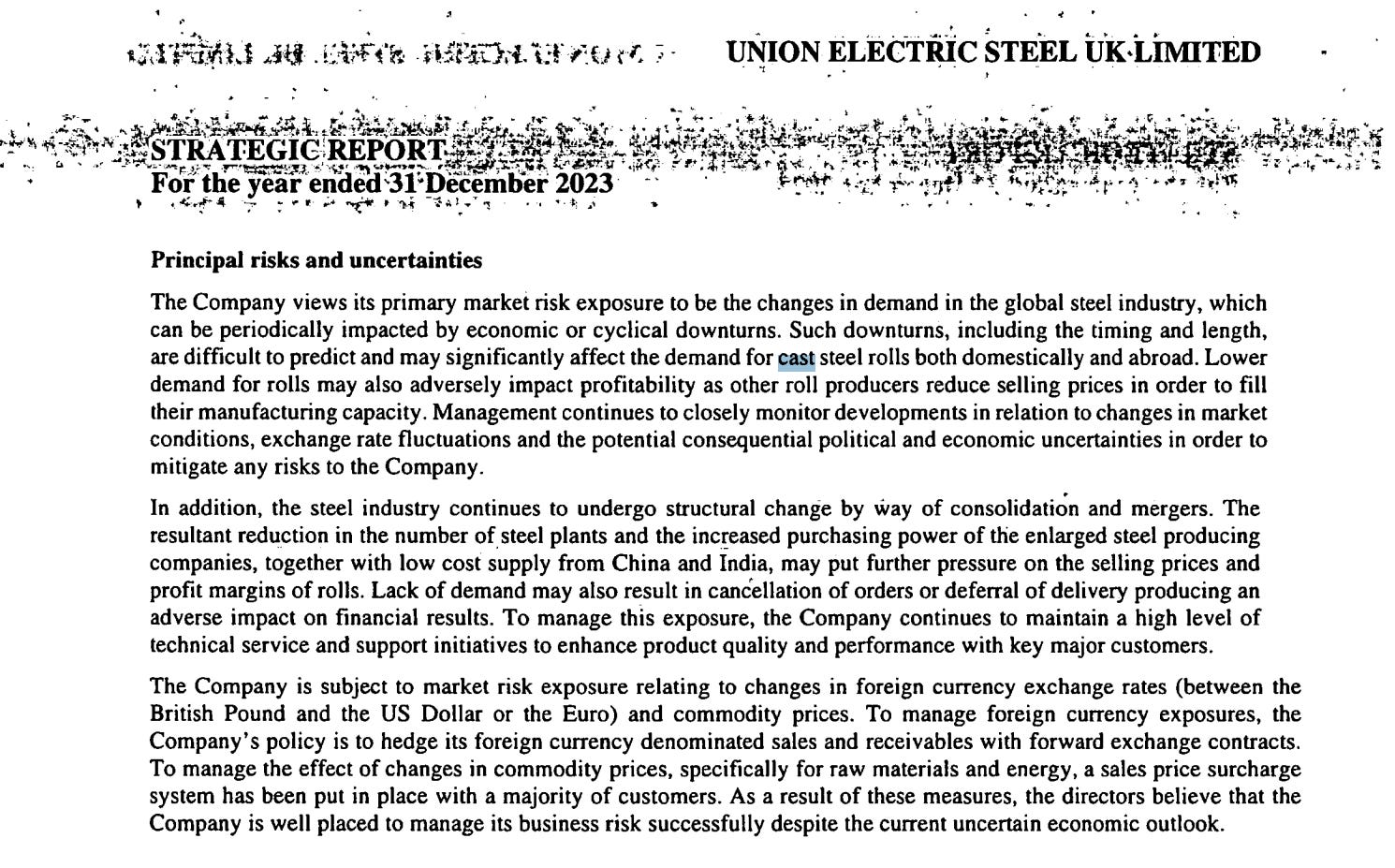
This is notable in light of management’s later comments that at least one customer was transitioned from cast to forged rolls following the UK exit, implying that cast capacity was reduced and selectively substituted where feasible. It is important to note that management also stated that this specific type of cast roll could not be produced in Sweden, meaning this does not reflect a structural limitation of cast roll production more broadly.
In addition, the risks highlighted in the standalone accounts of the UK subsidiary were likely UK specific. The Sweden and Slovenia operations appeared structurally sound throughout the period. Taken together, this suggests that the UK exit should lead to higher utilization of the remaining cast roll capacity, and that the UK facility was likely less focused on centrifugally cast rolls and more exposed to static cast rolls, which appear to have suffered disproportionately under the prevailing economic conditions compared with the other plants.
Although our US forged roll business performed well and our Air & Liquid Processing segment saw record backlog, record sales, and adjusted operating income during the year, excess plant capacity coupled with high energy costs in our European cast roll businesses weighed heavily on our 2023 results.
Brett McBrayer - Fourth Quarter 2023 Earnings Results
More broadly, I would expect materially higher profitability as both cast and forged roll operations approach full utilization of what can be considered normal capacity.

Just to keep this in mind when evaluating segment margins: FEP saw a significant uptick and management has already alluded to further price increases. Although these products still represent a relatively small share of total sales, their EBITDA margins are likely currently significantly elevated and should continue to have a meaningful impact on overall margins.
Let’s move to the ALP segment. What stands out is that, despite higher revenue and utilization, margins initially eroded. This cannot be fully explained by the revenue mix across different parts of the portfolio, which likely have materially different margin profiles given their respective market positions.
What may seem counterintuitive at first actually makes sense. In industrial businesses, costs are often front-loaded during periods of capacity expansion. Investments in new production equipment or modernization typically come with downtime, while the ramp-up of new manufacturing locations or the expansion of sales and production teams takes time to normalize. As a result, margins are temporarily pressured until utilization and efficiency catch up.
All parts of the ALP portfolio were affected by at least one of these measures. Importantly, the nine months ended 2025 show that margins are now moving in the right direction. Segment adjusted EBITDA in the third quarter amounted to $4.4 million, corresponding to an EBITDA margin of approximately 12%.
Air & Liquid began our strategic growth plan in 2022. The first year of the plan saw our backlog grow substantially as our expanded sales force made an immediate impact on incoming orders. In 2023, we saw those orders turn into shipments as sales surged by more than 30%. We also increased our manufacturing capacity by adding an additional manufacturing location in Virginia and expanding our production workforce.
David Anderson - Fourth Quarter 2023 Earnings Results
The Valuation
This will be one of my more detailed valuations as there are several thing you should take into account.
Let me start with the EV. Most important aspect to mention here is the asbestos liability. The asbestos liability does not stem from Ampco Pittsburgh’s current operations. It originates from legacy products manufactured decades ago by predecessor companies of its Air & Liquid segment.
Ampco Pittsburgh records asbestos related litigation liabilities only when losses are considered probable and can be reasonably estimated. To do so, the company relies on external asbestos liability and insurance experts to estimate future claim volumes, settlement and defense costs, and expected insurance recoveries, all of which are based on assumptions that are regularly reviewed and updated. Because asbestos litigation outcomes, insurance recoverability, and legal reforms are inherently uncertain, actual costs or recoveries may differ materially from current estimates, and future adjustments could have a significant impact on earnings, liquidity, and financial position.
To keep this from being more detailed than necessary, I would recommend adjusting the liability each quarter in your calculations and being aware that significant changes can occur at any time, as they did in 2024.
I included the lower end of the mentioned range for the liquidation proceeds, as well as $68.34m of federal operating losses that can be carried forward indefinitely.
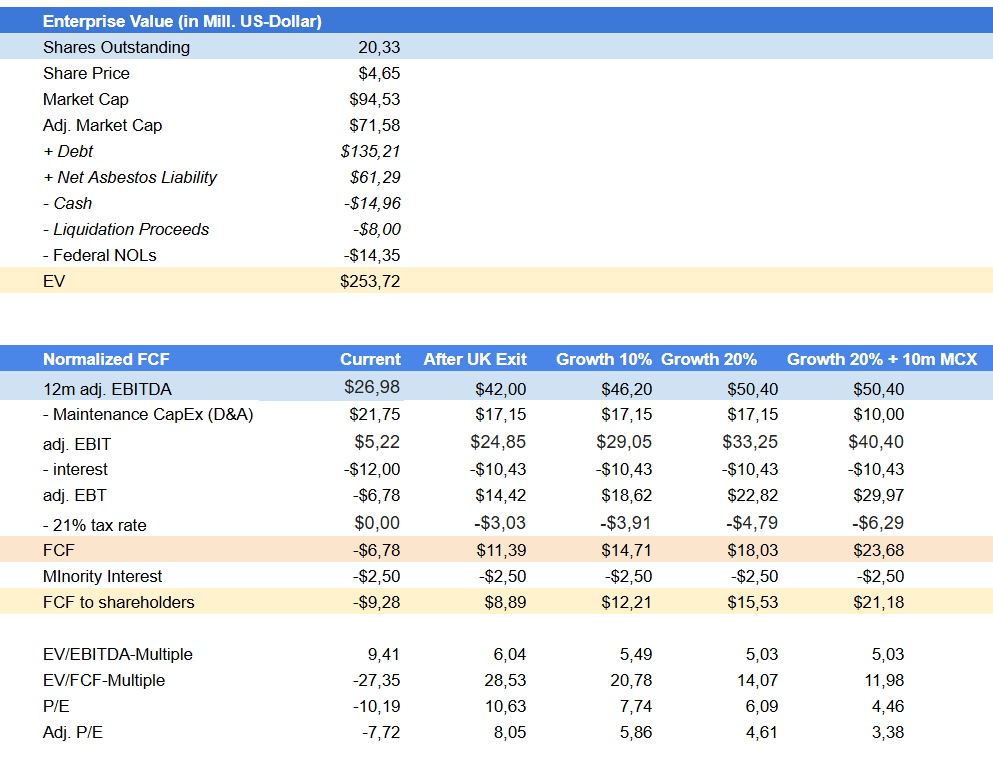
Regarding the EBITDA projections, I want to clarify that I do not believe the upper end is exaggerated. It is entirely possible that the opposite is true, given the potential operating leverage in the steel segment and the steadily improving margins in the ALP segment.
I used the ‘current’ view of the EBITDA to FCF conversion to illustrate how the company might appear to someone who only spends a few minutes on initial research and looks on adj. EBITDA TTM. Due to the UK exit, the company recorded accelerated depreciation. Normalized D&A is closer to $18.5m, but a portion of that was attributable to the UK subsidiary, so I deducted the GBP depreciation from 2023 from the D&A figure in my calculation.
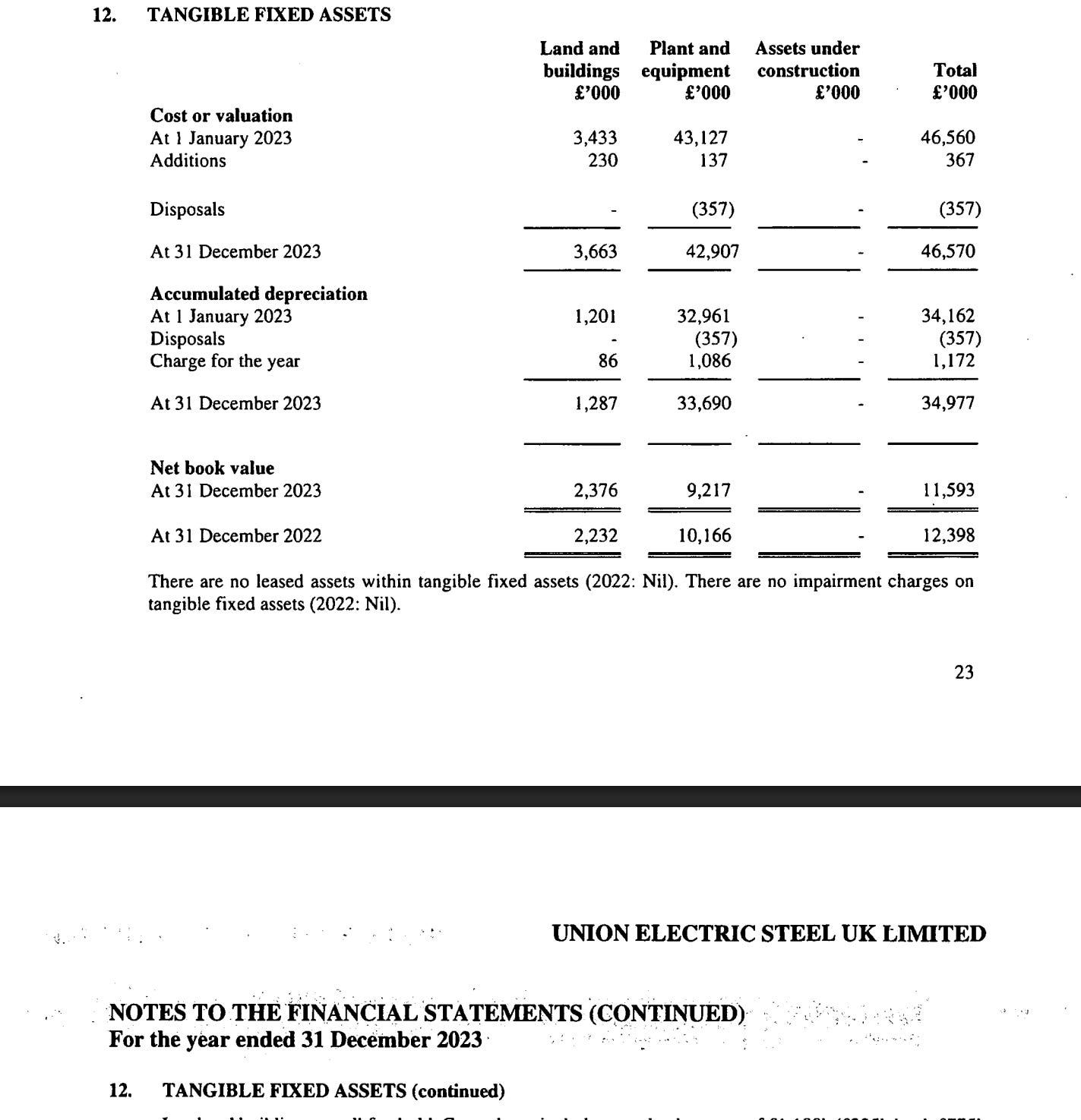
One should be aware that this level of depreciation is likely above the actual CapEx the company will report for the time being. In 2024, they recorded $12.2m in actual CapEx, and if you annualize the 2025 nine months ended figure, you arrive at $8.84m. So why is that?
One might assume that the company is underspending on maintenance, but that is very unlikely. They have recently completed both an expansion and a modernization in the ALP segment, as well as a significant long term investment in the modernization of their North American steel assets. In contrast, the UK operations, based on management’s responses, saw virtually no maintenance spending, which further supports the view that management had been considering an exit from this business for some time.
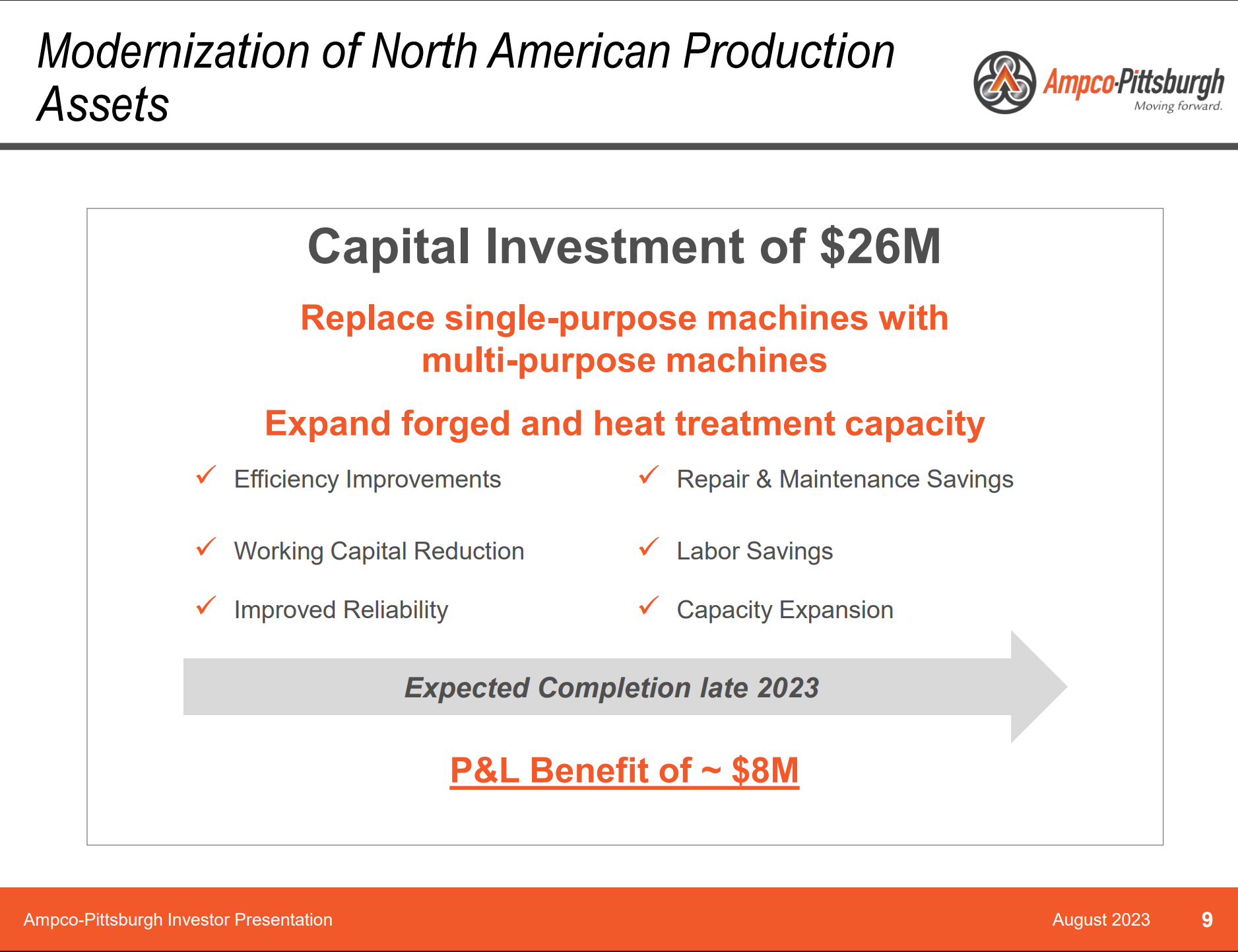
To emphasize this point, the assumed D&A as a proxy for maintenance CapEx is likely a very conservative assumption. A large portion of total CapEx could reasonably be classified as growth CapEx anyway, but I am sure you are already aware of that.
That is why I added the ‘Growth 20% + 10m MCX’ calculation to the table, to illustrate how the company might look from the outside. One should keep in mind, however, that the company is likely to pay significantly less tax than this, given its NOLs, which I already included in EV.
For the sake of simplification, I assumed a 21% corporate tax rate across all income, as neither Slovenia nor Sweden has a materially different corporate tax rate.
I assumed lower interest payments, as most of the company’s interest expense is linked to SOFR, which has declined significantly. However, this will not be fully reflected in Q4. I also assumed that the $8m in liquidation proceeds will be used for debt repayment, as management has already stated.
I deducted $2.5m from FCF in the final figure as a more conservative approach, rather than adding minority interests, which stem from the company’s joint ventures in China, to EV. One should be aware that net income in the prior two years was lower and closer to $2m, and there are clear reasons why this could change in the near term. That said, I do not want to make this more complex than necessary at this stage, as the impact is not material.
Finally, let me note that the ‘UK Exit’ scenario will materialize over time. Management stated that its impact should start to become visible from Q4, but they clarified to me that the $7–8m EBITDA improvement associated with the UK exit should be viewed as a full-year 2025 effect plus incremental improvements. That is how I derived the adjusted EBITDA figure. Management was careful not to provide anything that could be interpreted as formal guidance.
Given that the UK subsidiary reported an operating loss of approximately £6m in 2023, it appears reasonable to interpret the $7–8m EBITDA improvement primarily as the removal of these losses, rather than as evidence of incremental operating leverage from higher utilization. This, however, remains an interpretation rather than a statement made by management.
Let me also reiterate that a 20% growth assumption does not seem overly optimistic. The steel industry is well known for generating significant basis-point increases in EBITDA and EBIT while utilization rises only modestly. Given the number of moving parts, I still believe it is appropriate not to assume more than this at this stage, as many fact-check boxes will need to be ticked over time.
So what multiple would be reasonable for a company like this when assessing valuation? I believe it is appropriate to assume an EBITDA multiple of 10–15x for the ALP segment, with the upper end of that range arguably justified given its market positioning in several niche markets, strong conversion from EBITDA to free cash flow, and favorable growth prospects. Applying such a multiple to the annualized adjusted EBITDA of the ALP segment already brings you close to the company’s current enterprise value.
The steel business, by contrast, typically trades at an average of roughly 6–7x EBITDA. While it is fair to argue that certain parts of this segment may be of higher quality, this cannot be stated with certainty, as management has not explicitly segmented or disclosed this in detail.
Further Considerations
Let me add a few points that I have not discussed yet but that are still worth considering.
First, we have not addressed capital allocation. Given the equity to debt composition of the enterprise value, there is meaningful potential for attractive IRRs simply from debt repayment and the resulting increase in equity value as reflected in market capitalization. With maintenance CapEx likely running well below depreciation, the company should be able to generate meaningful free cash flow in the near term. Management has already stated that the proceeds from the UK liquidation will be used to pay down debt, and I do not expect a return to value destructive, empire building M&A.
From a shareholder perspective, the asbestos liability has one somewhat counterintuitive benefit in that it effectively functions as a cash flow sweep and enforces financial discipline. This view only holds, of course, if one treats the asbestos liability as debt like in nature, which I do.
Another aspect to consider is the potential for asset sales. Since the current CEO took over, management has already divested meaningful parts of the business. Given the earnings volatility of the steel segment, a period of higher utilization driven by the new EU steel safeguard measures could open a window to divest parts of the steel business.
Such a step could lead the remaining group being viewed and valued more like an ALP focused business, rather than a combined steel and ALP entity. This would be particularly relevant given the limited operational synergies between the EU steel segment and the remainder of the group. The company would still retain its U.S. facilities, and the overall business mix could therefore shift toward a higher quality, less volatile earnings profile.
That said, executing such a strategy would require a management team that is highly focused on IRR and shareholder value. Another point to consider in this respect is that at least three of the larger shareholders could be characterized as activist oriented, although only one might reasonably be described as an outright activist.
Conclusion
I want to conclude by noting that this case could be viewed as a ‘soufflé’ type investment. Parts of the business are highly cyclical and benefit more from political than purely operational tailwinds. That said, these tailwinds are meaningful and likely to materialize in the near term. At some point, however, the upside will likely find a natural ceiling, and the stock price could plateau or retrace if management does not prioritize IRR and consider divesting parts of the business. Until that point, I am willing to participate in the upside as long as the momentum holds.
I see current market dynamics as supportive for AP, given the range of opportunities across its segments and the visible year over year improvements in the financials that accompany them.
In my view, this is primarily a shorter term investment. At this stage, I would not consider a company that is still largely driven by steel industry dynamics to be a long term holding. That said, in practice, realizing the full benefit of the identified catalysts may require a longer holding period.
I rarely discuss position sizing explicitly in a write up, but I will say that I sized this position with political risk, a lengthy validation checklist, and the inherent unpredictability of political decision makers firmly in mind.